Menu +
Back to Use Cases

Telecom / Industrial IoT

Operationalizing real-time anomaly detection for industrial IoT environments.

Real-time anomaly detection requires more than streaming data. It requires device context, rules, thresholds, response paths, and deterministic event handling.

IoT anomaly detection is an operational telemetry pipeline problem, not only a model problem.

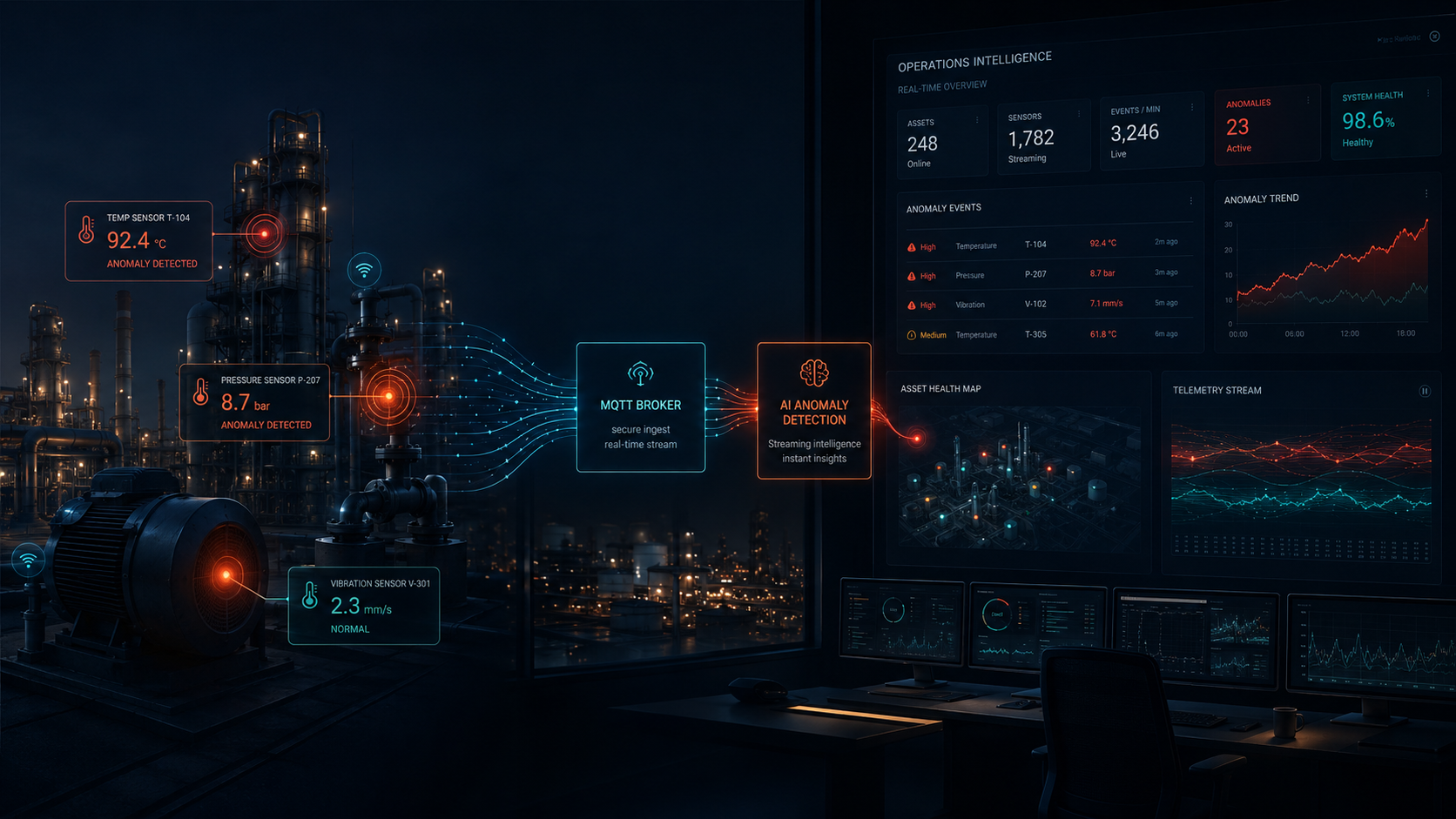
Industrial IoT telemetry environment with streaming sensor signals and anomaly indicators

Executive situation

A telecom services and solutions leader needed to build a real-time anomaly detection framework based on events from IoT sensors embedded in industrial equipment. The solution had to be built in weeks for a summit demonstration.

This is a strong direct Needletail story because the original case explicitly states that pSOLV built the solution using the Needletail platform.
The challenge beneath the challenge

The visible problem was anomaly detection. The deeper problem was real-time event orchestration.

The framework needed deterministic response times measured in milliseconds, integration with multiple databases, ingestion of large real-time event volumes, and immediate responses to mitigate anomaly risk.

Architecture view

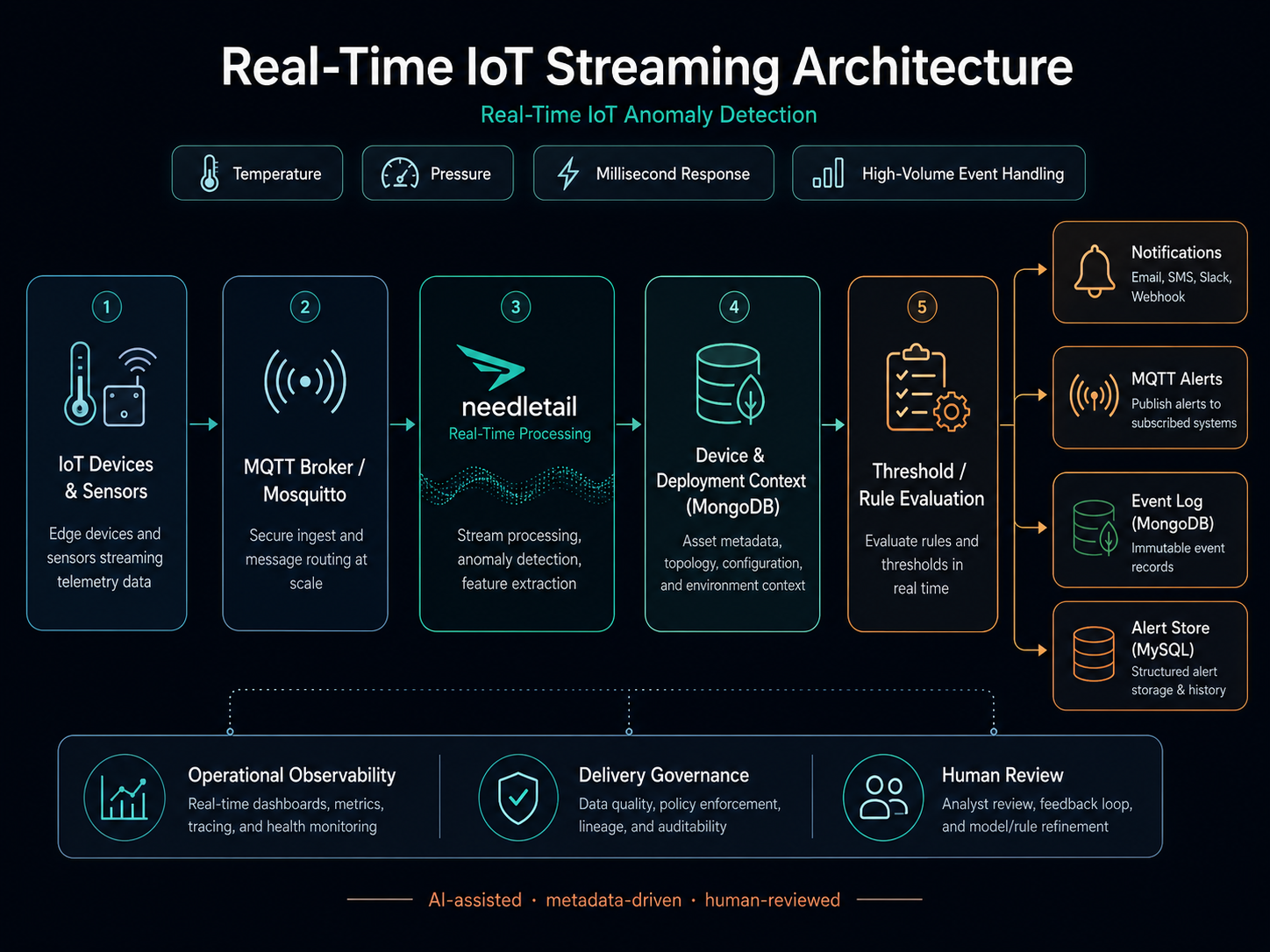
Streaming architecture for IoT events, device context, anomaly detection, and notifications

Why conventional delivery struggles

Real-time IoT use cases often fail when teams treat them as analytics projects instead of operational systems.

The difficulty is not just detecting an anomaly. The system must:

1

ingest device events reliably

2

correlate events with device metadata

3

evaluate thresholds or rules quickly

4

issue alerts through the right channels

5

persist events and alert history

6

keep latency predictable

pSOLV point of view

IoT anomaly detection is an event-processing workflow. The first objective is to create a reusable telemetry pipeline that can ingest, contextualize, evaluate, alert, and persist operational signals in a predictable way.

How Needletail AI accelerates the workflow

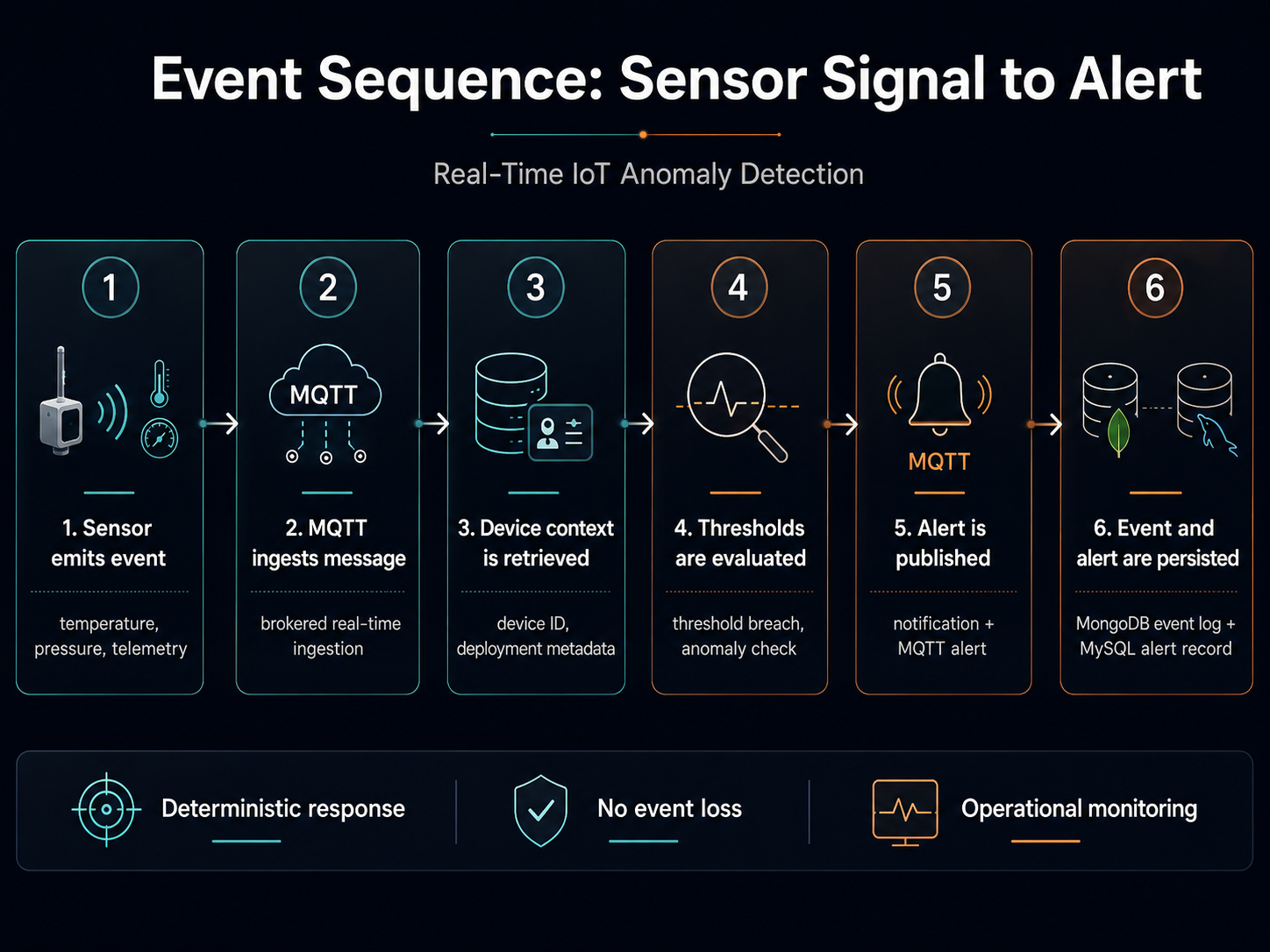
The original solution used Needletail to support batch and real-time processing, ingest events through MQTT, correlate device IDs with MongoDB-based device and deployment data, and issue notifications when temperature or pressure readings crossed thresholds.

Needletail AI can extend this pattern by accelerating:

  1. 1

    telemetry source onboarding

  2. 2

    event-schema profiling

  3. 3

    context-enrichment mapping

  4. 4

    threshold and rule scaffolding

  5. 5

    alerting workflow design

  6. 6

    observability and audit-trail patterns

  7. 7

    reusable anomaly-detection pipeline templates

Workflow anatomy

Sources, foundation, controls, and outputs in one delivery view.

IoT event sequence from sensor reading to context lookup, threshold evaluation, and alert response

sources

IoT sensors, MQTT broker, device metadata, deployment data

foundation

real-time ingestion, device-context enrichment, rule evaluation

controls

deterministic response, event logging, alert publishing, operational observability

outputs

anomaly notifications, persisted event history, alert workflow, reusable event-processing framework

Business outcomes

The original solution was built within two weeks, demonstrated 600K events per minute with no event loss, logged events to MongoDB, published alerts to MQTT, and stored alerts in MySQL. Reported outcomes included a versatile multi-use-case framework, millisecond alerting, and scalability for large event volumes.

accelerated prototype-to-demo

reusable streaming event framework

deterministic alert response pattern

scalable telemetry processing

foundation for future anomaly and operational intelligence use cases

Next step

Start with one telemetry workflow that needs reliable response.

Start with one workflow