
Menu +
Back to Use Cases

Financial Services / Risk

Creating a scalable real-time data foundation for fraud detection.

Fraud detection performance depends on more than models. It depends on whether the platform can ingest, process, govern, and act on fast-moving signals at scale.

Fraud platforms are won or lost on reliable real-time and batch data fusion.

Fraud operations command center with transaction streams, risk signals, and analyst workflow

Executive situation

A risk-management company serving community banks and credit unions needed a scalable platform to handle increased data-processing scale. Real-time detection of fraudulent activity was central to helping its customers avoid the impact of financial crime.
The challenge beneath the challenge

The visible challenge was fraud detection. The deeper challenge was scalable, controlled, real-time data processing.

The legacy environment struggled with more data sources, real-time ingestion needs, regulated processing requirements, complicated business rules, and aging infrastructure. The customer needed a platform capable of horizontal scaling, batch and streaming workloads, and future advanced analytics.

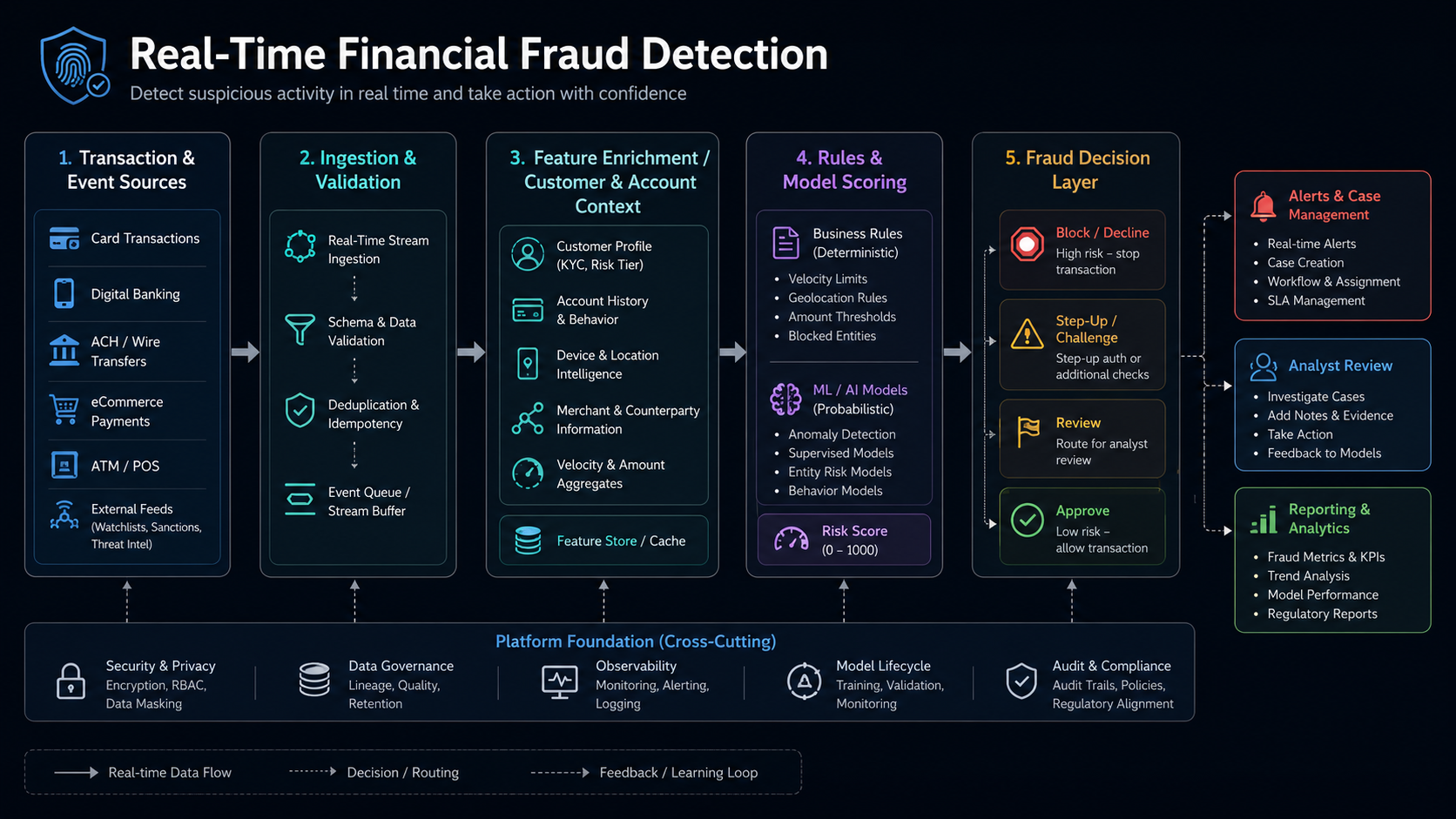
Architecture view

Fraud detection architecture connecting transaction streams, reference data, rules context, and analyst workflow

Why conventional delivery struggles

Fraud programs often over-index on detection logic while underestimating the platform underneath.

A reliable fraud foundation requires:

1

ingesting both batch and real-time transactions

2

supporting flexible business rules

3

maintaining regulated-processing context

4

scaling horizontally as data volume increases

5

enabling advanced analytics beyond the initial fraud workflow

6

preserving observability and lineage across risk decisions

pSOLV point of view

Fraud detection is a data-platform problem before it is a scoring problem. The foundation must connect real-time events, batch data, business rules, regulated controls, and predictive analytics into a reliable operational workflow.

How Needletail AI accelerates the workflow

Needletail AI can accelerate fraud and risk pipelines by helping teams:

  1. 1

    profile real-time and batch sources

  2. 2

    design metadata-driven ETL patterns

  3. 3

    map rule-ready data models

  4. 4

    identify quality checks for risk workflows

  5. 5

    scaffold lineage and observability

  6. 6

    support reusable event-processing and alerting patterns

  7. 7

    prepare human-reviewed implementation plans

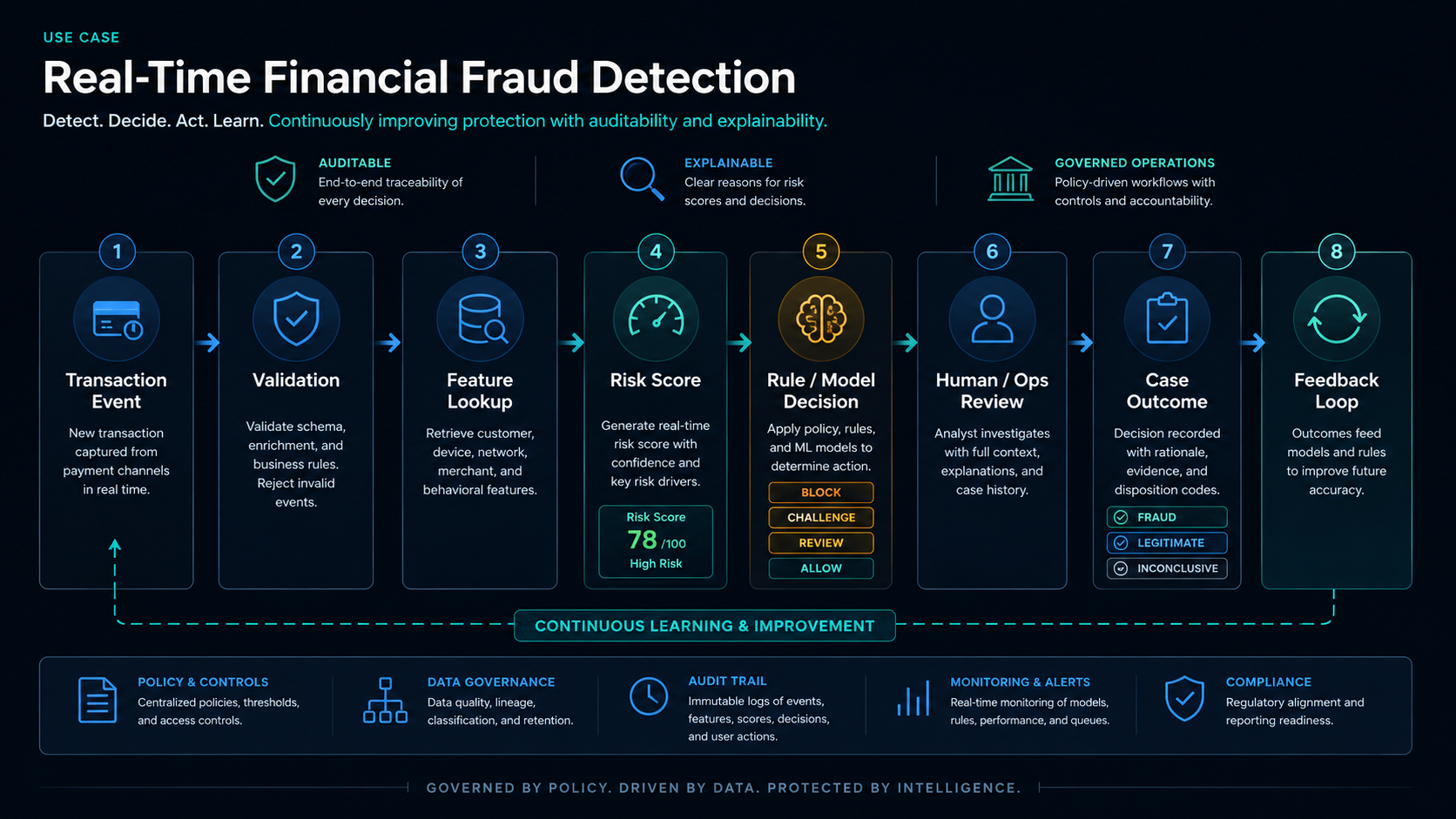
Workflow anatomy

Sources, foundation, controls, and outputs in one delivery view.

Fraud event flow from ingestion and enrichment to rule evaluation, alerting, and analyst action

sources

real-time transactions, batch transactions, customer / account reference data, risk rules, regulated-context data

foundation

metadata-driven real-time ETL, multitenant processing, scalable platform architecture

controls

business rules, regulated-processing context, quality checks, operational monitoring

outputs

real-time fraud identification, advanced predictive analytics foundation, business-user configurable rules

Business outcomes

The original case reported that pSOLV rapidly implemented a solution with real-time and batch transaction processing, metadata-driven real-time ETL, multitenancy, and advanced predictive analytics. Outcomes included real-time financial crime identification, horizontal scalability, flexible business rules configurable by business users, and a strong foundation for strategic goals.

scalable real-time fraud processing

more flexible business-rule execution

stronger platform foundation for risk analytics

improved readiness for advanced analytics and anomaly detection

better ability to handle growing data-source complexity

Next step

Start with one fraud or risk workflow that needs scalable data execution.

Start with one workflow