Executive situation
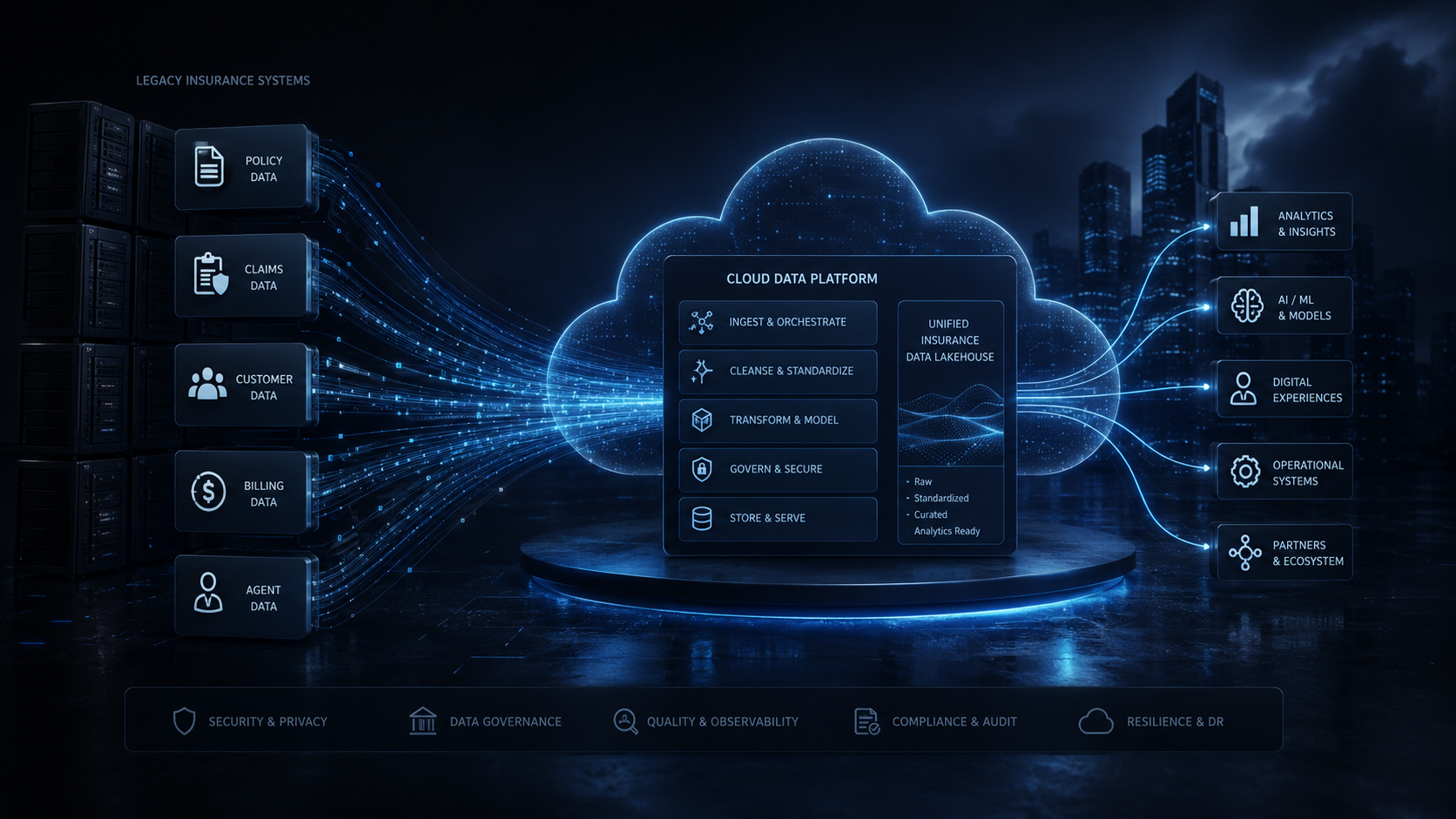
A US-based insurance company offering auto, home, commercial, and life insurance through independent agents pursued cloud migration as part of a broader mandate to become a resilient and innovative data-driven enterprise.
Insurance / Cloud Modernization
Cloud migration is not a relocation exercise. It is a controlled modernization of data operating primitives into a scalable, governed target state.
Insurance cloud migration succeeds when data operating continuity is protected.
Executive situation
A US-based insurance company offering auto, home, commercial, and life insurance through independent agents pursued cloud migration as part of a broader mandate to become a resilient and innovative data-driven enterprise.
The challenge beneath the challenge
The visible challenge was migration. The deeper challenge was continuity.
The company needed to move an existing on-premise solution to the cloud without disrupting existing data processing and analytical capabilities. The data platform had to remain functional while the modernization path unfolded.
Why conventional delivery struggles
Cloud migration programs often over-focus on infrastructure and under-focus on data workflow continuity.
The hard questions are:
Which pipelines move first?
Which dependencies create migration risk?
Which data products must remain uninterrupted?
Where can migration steps be automated?
How will quality be validated before cutover?
How does the target platform improve reliability, performance, and future agility?
pSOLV point of view
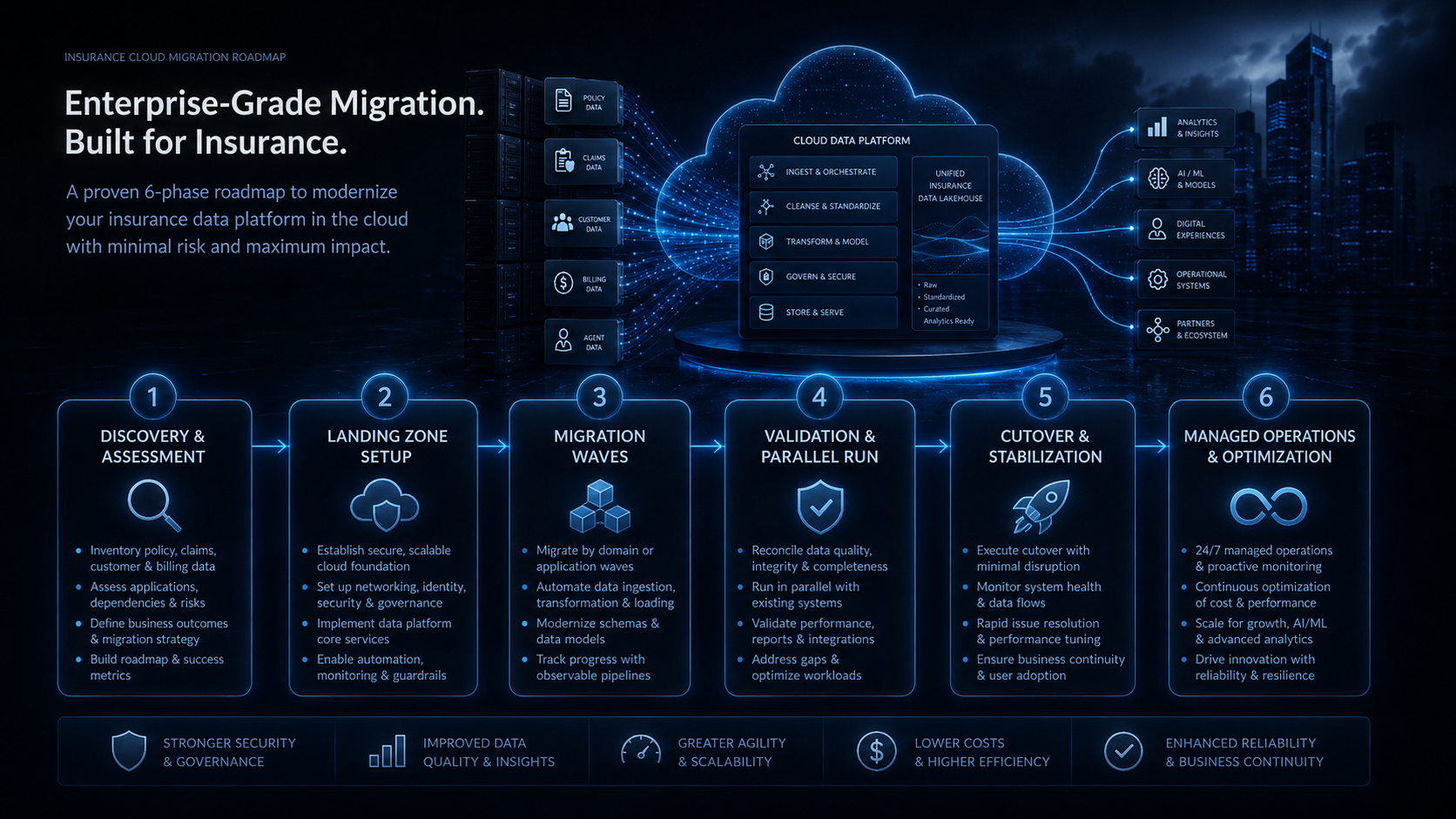
Insurance modernization should be organized around migration slices, dependency mapping, automation, validation, and business continuity. The goal is not only to move the platform, but to create a more scalable data operating model.
How Needletail AI accelerates the workflow
Needletail AI can accelerate migration by supporting:
source and pipeline inventory
dependency discovery
migration-slice prioritization
schema and workload profiling
quality-validation planning
target-state pipeline patterning
human-reviewed migration sequencing
This keeps migration grounded in business continuity and technical validation.
Workflow anatomy
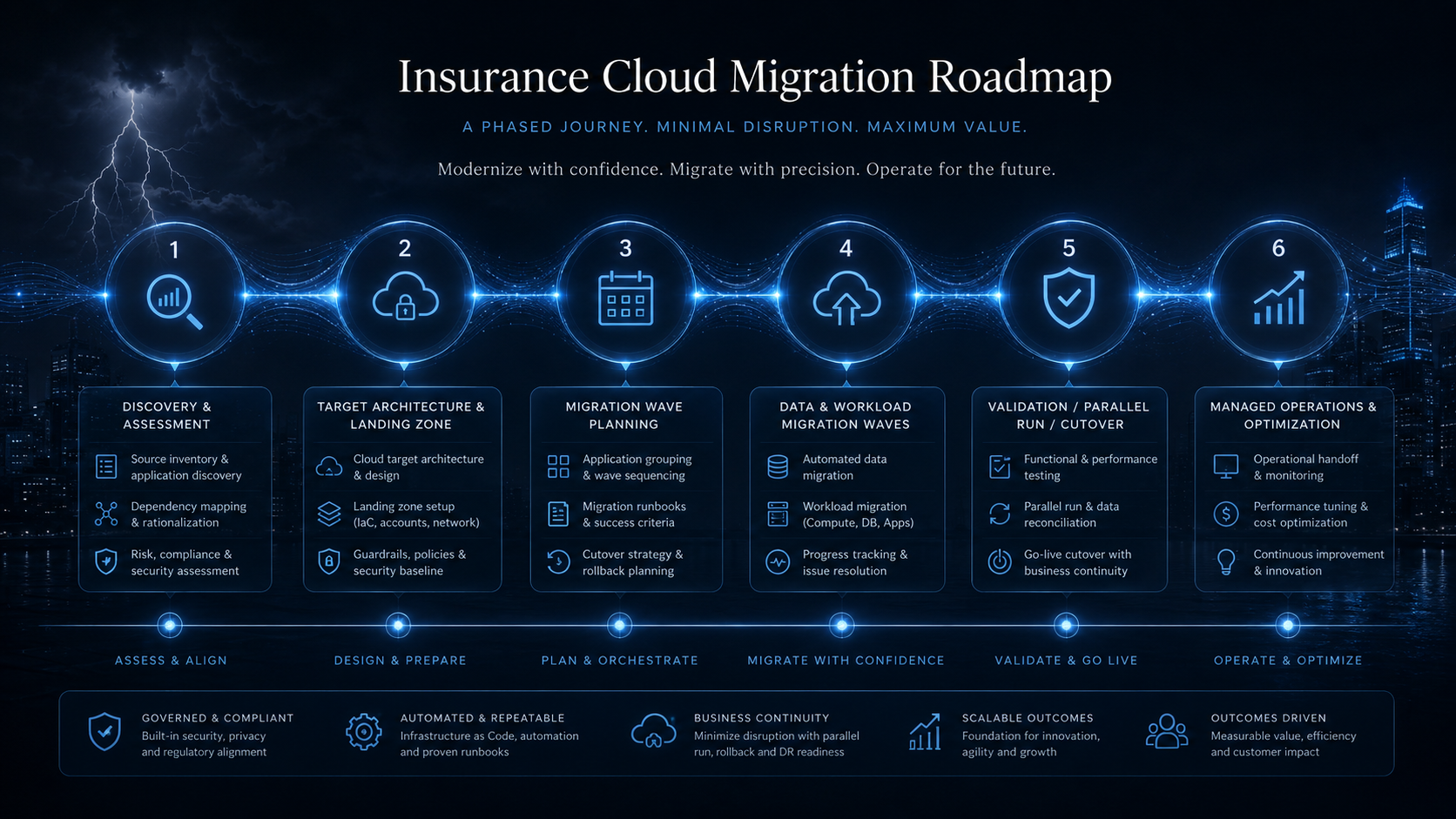
sources
on-premise data platform, insurance data workloads, analytics pipelines
foundation
migration strategy, dependency mapping, automated migration steps, validation plan
controls
quality checks, disruption avoidance, performance review, reliability hardening
outputs
cloud data platform, improved scalability, improved reliability, faster time-to-market path
Business outcomes
The original case reported timely migration with minimal disruption, optimized total cost of ownership, elastic scalability, improved performance and reliability, readiness for growth, improved time-to-market, and expanded ability to use AWS services for advanced data solutions.
reduced migration disruption
better platform scalability
improved performance and reliability
stronger cloud-readiness
faster path to future data-oriented solutions
Next step