Menu +
Back to Use Cases

Healthcare / Cloud Analytics

Unifying fragmented healthcare operations and finance data for cloud analytics.

In healthcare, the analytics problem is usually a systems-fragmentation problem first.

Healthcare analytics becomes valuable when fragmented operations and finance data become governed decision foundations.

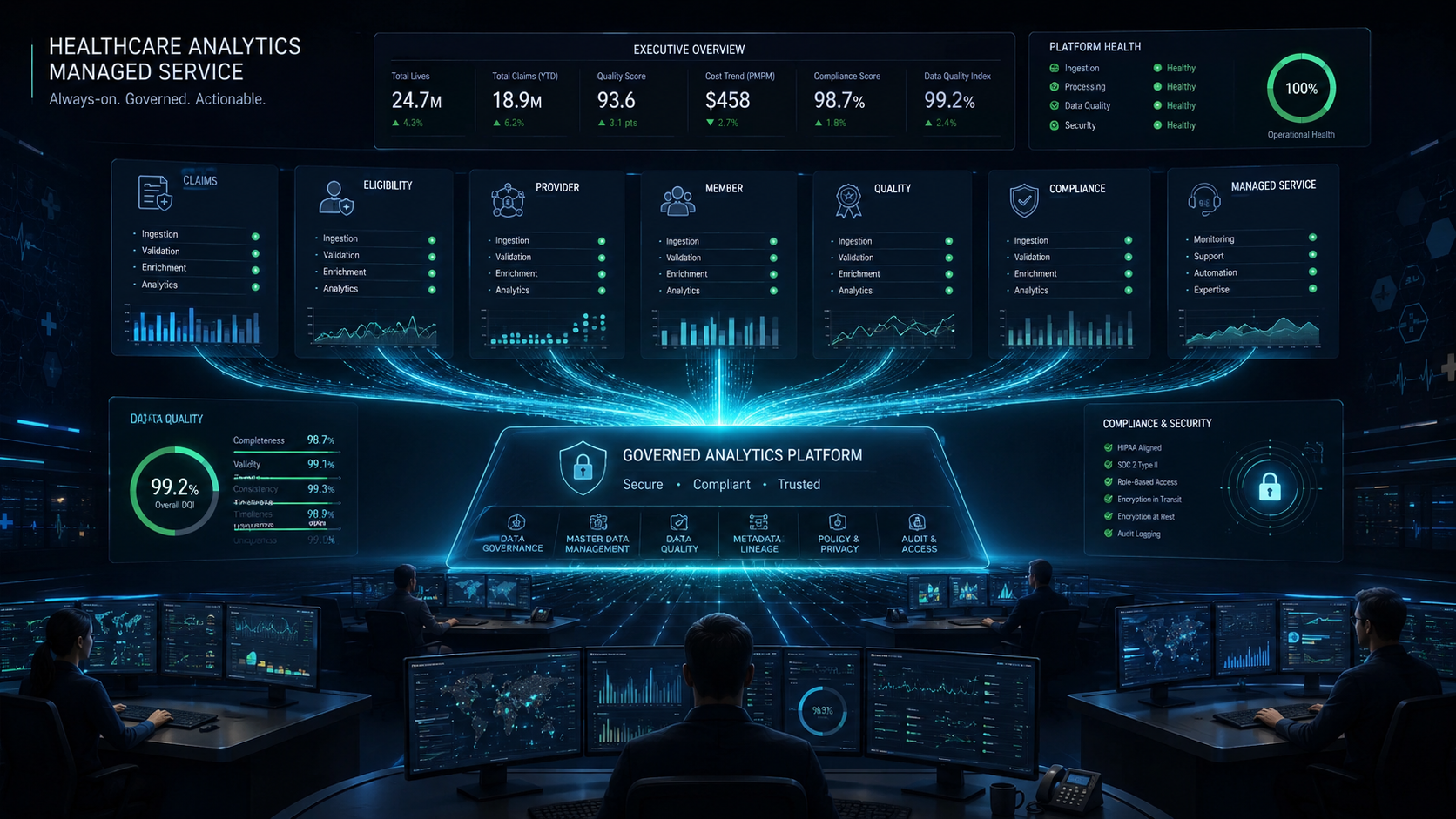
Healthcare analytics data network spanning regional operations, finance, clinical-adjacent, and governance signals

Executive situation

A mission-oriented healthcare provider with hospitals in the US and LATAM was expanding through partnerships and acquisitions. Its facilities used ERP, supply-chain, and EMR systems that varied by facility and region. The organization wanted a consolidated view of operations and finance data to enable BI and advanced analytics for finance, operations, and patient experience.
The challenge beneath the challenge

The visible challenge was analytics. The deeper challenge was cross-region, multi-system data governance.

The customer needed to consolidate data from varied sources across geographies and currencies. It was also the customer's first cloud-based solution, requiring role-based access and a future-proof design that could support regional and corporate BI and analytics teams.

Architecture view

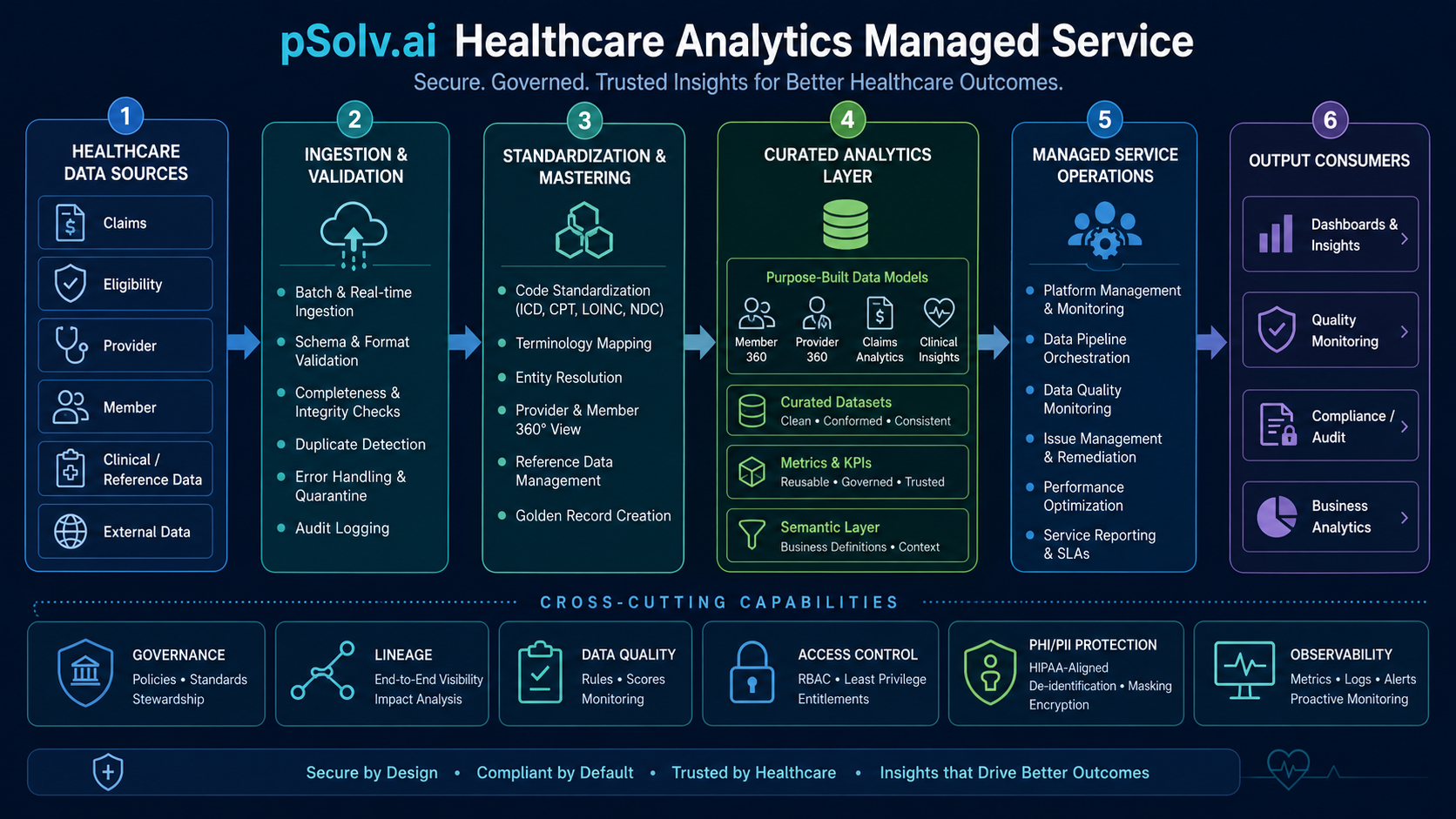
Healthcare data architecture connecting operations, finance, regional, and clinical-adjacent systems

Why conventional delivery struggles

Healthcare analytics programs often struggle when integration, access, governance, and adoption are treated separately.

The foundation must account for:

1

different systems by region and facility

2

operational and finance data integration

3

currency normalization

4

role-based access

5

cloud adoption comfort

6

phased rollout

7

governance and managed-service operations

pSOLV point of view

Healthcare analytics should be built as a governed operating foundation, not as a one-off reporting layer. The first objective is to create a controlled, trusted, cloud-based data environment that can support both local and corporate analytics needs.

How Needletail AI accelerates the workflow

The original case says Phase 2 included direct ingestion from multiple sources with connectivity and data pipeline capability enabled by Needletail.

Needletail AI can accelerate this class of healthcare analytics workflow by supporting:

  1. 1

    metadata-driven ingestion planning

  2. 2

    source profiling across ERP, supply-chain, EMR, finance, and regional systems

  3. 3

    lineage and governance-readiness mapping

  4. 4

    role-based access design support

  5. 5

    quality-rule drafting for operational and finance data

  6. 6

    sensitive-data discovery support where validated

  7. 7

    human-reviewed delivery planning

Sensitive-data discovery and healthcare governance remain validated, scoped, and human-reviewed.

Workflow anatomy

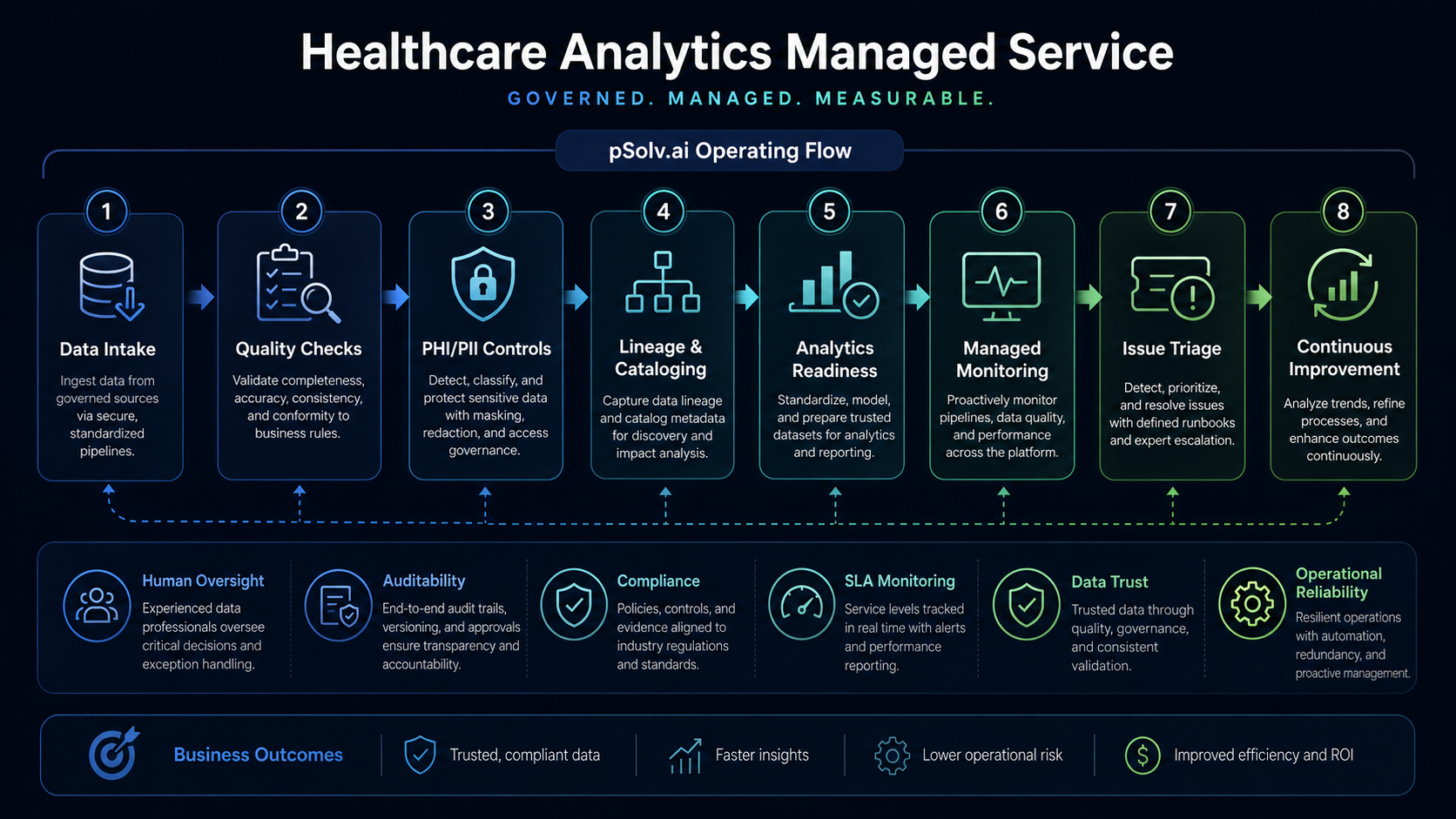
Sources, foundation, controls, and outputs in one delivery view.

Healthcare governance flow from ingestion and normalization to access control and executive dashboards

sources

ERP, supply chain, EMR, finance, currency data, regional facility systems

foundation

healthcare-governance-aware AWS data lake, phased ingestion, currency conversion, role-based access

controls

governance readiness, access control, data quality, managed service operations

outputs

online access to day-to-day data, financial statements, supply-chain monitoring, regional and corporate BI / analytics

Business outcomes

The original case reported customer adoption of a cloud-based managed-services solution, automated and timely processing from divergent application sources, and online access to day-to-day data.

consolidated operational and finance visibility

improved cloud analytics adoption

stronger role-based access foundation

managed data operations across varied systems

better readiness for future BI and advanced analytics

Next step

Start with one healthcare analytics workflow that needs governed data access.

Start with one workflow